
Critical materials demand
Energy systems, electrification, electronics, defense, advanced industry and infrastructure all require a broader and more secure critical-metals base.
New book from ARBOK Institute
52 critical elements — from lithium and vanadium to rhenium and the rare earths — examined through one strategic question: where is the metal already dissolved, who is already paying to bury it, and what is that stream worth once the metal comes out of it?
Strategic thesis
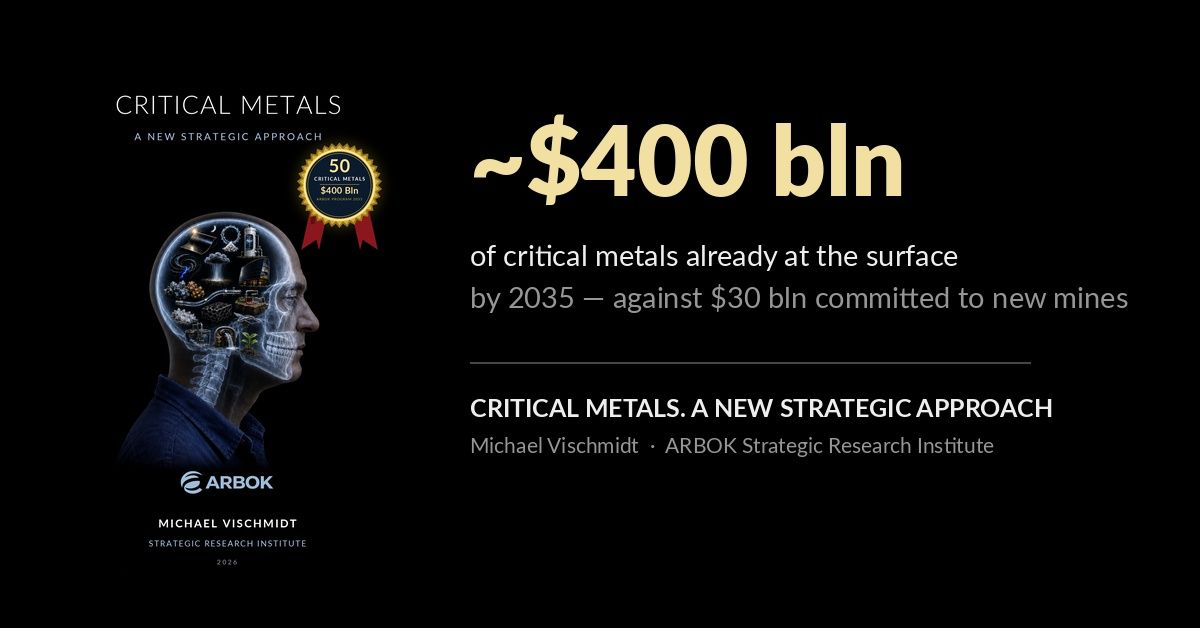
By 2035 the world needs roughly $400 billion of critical metals. About $30 billion is committed to new mines. That gap does not close underground.
The book reframes the search for critical minerals around streams that already exist at the surface: mine waters, brines, residues, industrial effluents and waste flows that companies and municipalities are already paying to manage.
For each element, the same diligence logic applies: where is it already dissolved, who owns or pays for that stream, and what value can be recovered when the metal is separated from it?
Why this matters
Energy systems, electrification, electronics, defense, advanced industry and infrastructure all require a broader and more secure critical-metals base.
New mines alone cannot meet the capital, timing, permitting and geopolitical requirements implied by the 2035 demand horizon.
Many valuable elements are already present in liquid and semi-liquid streams that are treated as liabilities rather than recoverable resource flows.
The institute’s Zero Waste Discharge logic aligns with the book’s core premise: waste streams can become strategic material supply channels.
Kindle edition